
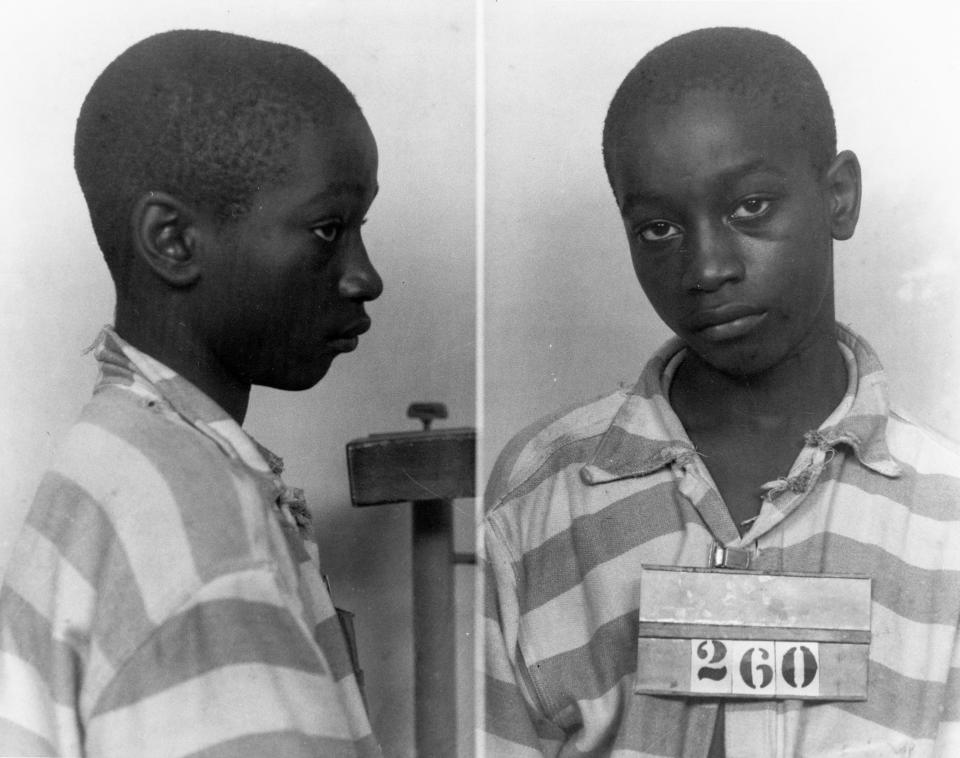
A 14-year-old black boy executed
nearly 70 years ago is finally getting another day in court, and his
lawyers plan to argue Tuesday for a new trial, saying his conviction was
tainted by the segregationist-era justice system and scant evidence.
George
Stinney was found guilty in 1944 of killing two white girls, ages 7 and
11. The trial lasted less than a day in the tiny Southern mill town of
Alcolu, separated, as most were in those days, by race.
Nearly all
the evidence, including a confession that was central to the case
against Stinney, has disappeared, along with the transcript of the
trial. Lawyers working on behalf of Stinney's family have gathered new
evidence, including sworn statements from his relatives accounting for
his whereabouts the day the girls were killed and from a pathologist
disputing the autopsy findings.
The novel decision of whether to
give someone executed a new trial will be in the hands of Circuit Judge
Carmen Mullen. Experts say it is a longshot. South Carolina law has a
high bar to grant new trials. Also, the legal system in the state before
segregation often found defendants guilty with evidence that would be
considered scant today. If Mullen finds in favor of Stinney, it could
open the door for hundreds of other appeals.
But the Stinney case
is unique. At 14, he's the youngest person executed in the United States
in the past 100 years. Even in 1944, there was an outcry over putting
someone so young in the electric chair. Newspaper accounts said the
straps in the chair didn't fit around his 95-pound body and an electrode
was too big for his leg.
Stinney's supporters said racism, common
in the Jim Crow era South, meant deputies in Clarendon County did
little investigation after they decided Stinney was the prime suspect.
They said he was pulled from his parents and interrogated without a
lawyer.
School board member George Frierson heard stories about
Stinney growing up in the same mill town he did, and he has spent a
decade fighting to get him exonerated. He swallowed hard as he said he
hardly slept Monday night.
"Somebody that didn't kill someone is finally getting his day in court," Frierson said.
In
1944, Stinney was likely the only black in the courtroom. On Tuesday,
the prosecutor arguing against him will be Ernest "Chip" Finney III, the
son of South Carolina's first black chief justice. Finney argued
Tuesday there shouldn't be a new trial because the evidence was lost
with the passage of time, not destroyed.
"Back in 1944, we should have known better, but we didn't," Finney said.
Finney
has said he will conduct an investigation if a new trial is granted,
but what that might find is not known. South Carolina did not have a
statewide law enforcement unit to help smaller jurisdictions until 1947.
Newspaper stories about Stinney's trial offer little clue whether any
evidence was introduced beyond the teen's confession and an autopsy
report. Some people around Alcolu said bloody clothes were taken from
Stinney's home, but never introduced at trial because of his confession.
No record of those clothes exists.
Relatives of one of the girls
killed, 11-year-old Betty Binnicker, have recently spoke out as well,
saying Stinney was known around town as a bully who threatened to fight
or kill people who came too close to the grass where he grazed the
family cow.
It isn't known if
the judge will rule Tuesday, or take time to come to her decision.
Stinney's supporters said if the motion for a new trial fails, they will
ask the state to pardon him.


 A 14-year-old black boy executed
nearly 70 years ago is finally getting another day in court, and his
lawyers plan to argue Tuesday for a new trial, saying his conviction was
tainted by the segregationist-era justice system and scant evidence.
A 14-year-old black boy executed
nearly 70 years ago is finally getting another day in court, and his
lawyers plan to argue Tuesday for a new trial, saying his conviction was
tainted by the segregationist-era justice system and scant evidence.


 She dismissed all the talk with “I haven’t approached anyone.